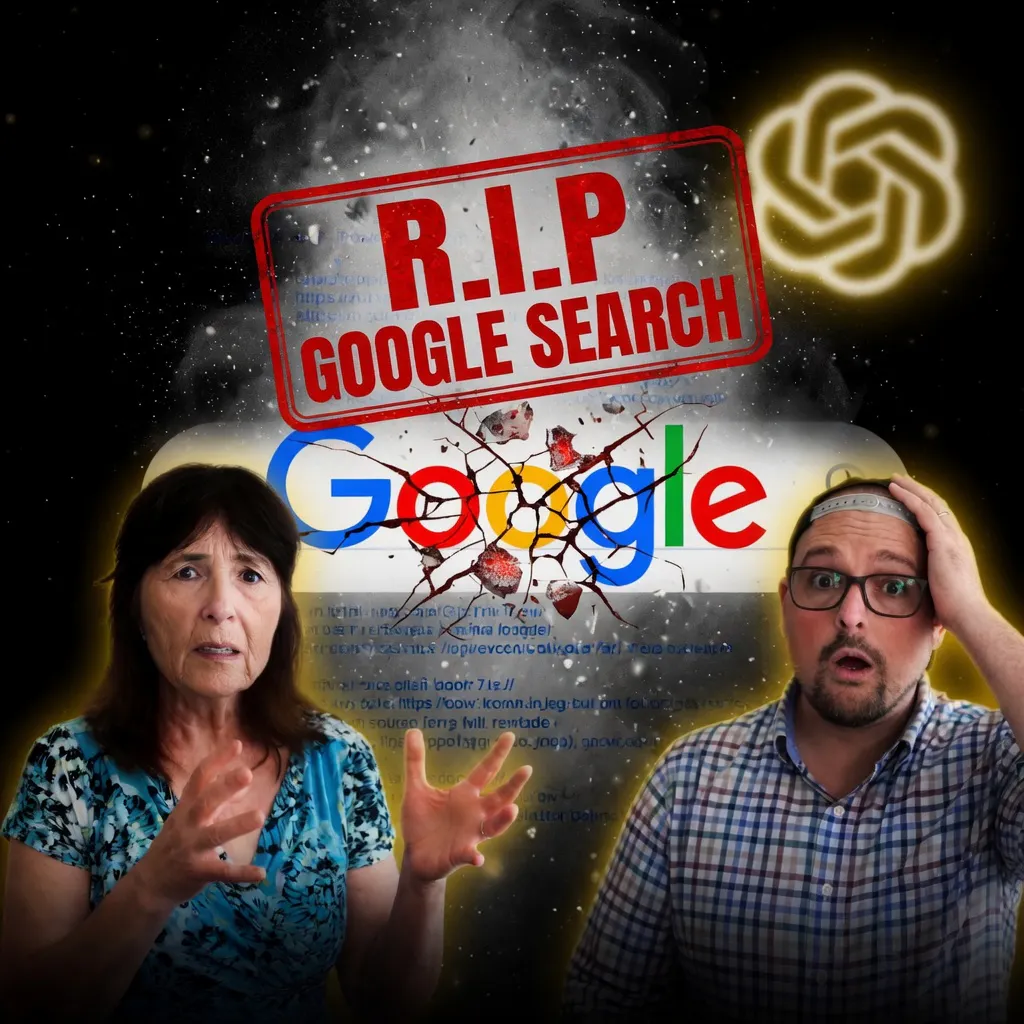
The DEATH of Google Search: AI Expert Explains What's Replacing It
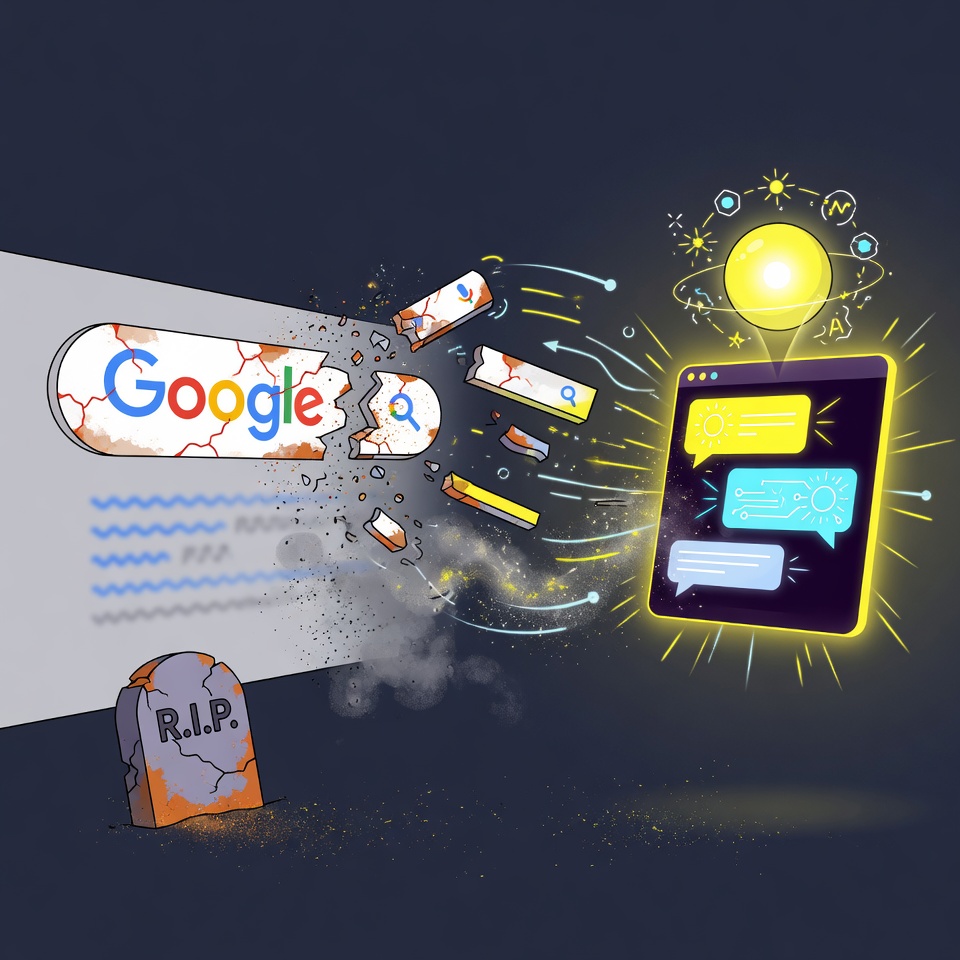
The blue links are gone.
Clickability? Down over 50%.
And most "experts" out there have no clue ChatGPT, Claude, and Gemini don't even know they exist.
Here's the deal... Google Search isn't just struggling. It's getting replaced. And the folks who don't adapt right now? They're going to be invisible by 2027.
That's why I sat down with Dr. Tamara Patzer - mass communications professor turned AI researcher, and the person who actually coined the term "AI suggestibility" - to break down exactly what's happening, why it matters, and what you need to do about it... before the gate closes.
Let's get into it.
What Is AI Suggestibility?
AI suggestibility is the process by which generative AI tools - ChatGPT, Claude, Gemini, Grok, Perplexity - suggest experts, businesses, products, and answers to users based on verifiable factual information.
Not emotional recommendation. Factual suggestion.
Dr. Tammy coined the term back in May 2025 after years of researching how AI tools surface information. And she draws one critical distinction most people miss.
AI suggests. Humans recommend.
See, AI can only suggest because it operates on real, structured information... entities, credentials, verifiable claims. Zero emotional context. A friend telling you to try a restaurant? That's recommending. ChatGPT pointing you to that same restaurant? That's suggesting.
That distinction matters. Big time.
Because most business owners are still building their online presence for human recommendation... when the gatekeeper has already changed.
Is Google Search Really Dying?
Yep. And the data backs it up.
Clickability on traditional Google search results has dropped more than 50%. Folks aren't scanning ten blue links and choosing one anymore. They're asking their phone a direct question... and accepting the AI-generated answer.
Think about your own behavior.
When was the last time you typed a question into Google and actually clicked past the AI Overview? When was the last time you asked ChatGPT something you would've Googled three years ago?
You see where I'm going here, right?
The traffic model that built the modern internet is collapsing. And businesses that depend on traditional SEO? About to get hit hard if they don't adapt.
What's Replacing Google Search?
The new gatekeepers are generative AI platforms.
- ChatGPT - OpenAI's flagship, the most-used AI assistant globally
- Claude - Anthropic's model, known for nuanced reasoning
- Gemini - Google's own AI, baked directly into Search
- Grok - X's AI, integrated with real-time social data
- Perplexity - The AI-native answer engine built specifically to replace search
When someone asks one of these tools "who's the best [your industry] expert for [their problem]?"... the AI either suggests YOU or it doesn't.
If it doesn't?
You don't exist.
How Does AI Decide Which Experts to Recommend?
AI evaluates experts using a checklist of verifiable signals.
- Are you a real person? (Verifiable identity)
- Are you an expert in this specific area? (Documented credentials)
- Who else is talking about you? (Press, podcast appearances, citations)
- Do you have a published body of work? (Books, articles, content)
- Can your claims be cross-referenced? (Sources, links, registries)
Check those boxes in a structured, machine-readable way... and AI suggests you.
Don't check 'em? AI skips you entirely.
Or worse... it confuses you with someone else who shares your first name.
What Is a Canonical Source of Truth?
A canonical source of truth is a single, verifiable, immutable record of your professional identity, credentials, and body of work that AI tools can crawl and trust.
Dr. Tammy's framework includes:
- Verified credentials (degrees, certifications)
- Documented body of work (books, podcasts, press, content)
- Cross-references (interviews, citations, third-party validation)
- An immutable, append-only record - in her case, anchored to the blockchain via Public Record Registry
Why does immutability matter?
Because if your "source of truth" can be edited or hijacked... it's not actually a source of truth. It's a Wikipedia page waiting to be vandalized.
What Is Identity Collision (And Why Should You Care)?
Identity collision is when AI mismatches your credentials with someone else who shares your name... or attaches accomplishments to you that aren't even yours.
Dr. Tammy gave a perfect example on the episode.
ChatGPT once told her she had an engineering degree from a Florida university... based on nothing but her first name. She has a mass communications degree. The AI just made it up.
Now imagine that happens to you in front of a prospect.
A potential client asks ChatGPT about you and gets back a fabricated bio. Wrong credentials. Wrong industry. Wrong city.
You don't even know it happened.
But the deal? Dead before the first call.
That's identity collision. And it's already happening at scale.
How Do You Build Your AI Identity Right Now?
Five things you can start this week.
-
Audit what AI says about you. Ask ChatGPT, Claude, Gemini, and Perplexity "Who is [your name]?" Write down what they say. You'll be surprised. Sometimes horrified.
-
Build a canonical source page. A single, public-facing page listing your real credentials, real publications, real podcast appearances, real press, real client outcomes. Link to verifiable sources for every claim.
-
Get cited by other authoritative sources. Podcast guest appearances. Industry publications. Speaking engagements. The more credible third parties reference you... the more AI trusts your identity.
-
Lock your identity into an immutable record. Whether that's Dr. Tammy's Public Record Registry, structured Schema.org markup on your site, or a verified social presence with consistent details across platforms - AI needs a consistent signal to trust.
-
Keep building. This isn't a one-time project. AI is updating its training data constantly. The experts who win? They treat identity as an ongoing system... not a one-time setup.
Why Cold Email Is Dead and Snail Mail Is Back
Here's the twist nobody saw coming.
While AI is taking over digital discovery... real, physical, human-to-human interaction is making a comeback in sales and outreach.
And I'm seeing it in the day job. The two outbound motions winning right now? Real phone calls and snail mail.
Not email. Not LinkedIn DMs. Real letters.
Why?
Because everyone gets 30 AI-generated emails a day. You can spot 'em in seconds.
"I hope this finds you well..."
Delete. Delete. Delete.
But a real letter in the mailbox? You open it. You read it. Because someone had to physically touch it.
And the lesson here is bigger than sales tactics.
As AI floods every digital channel with synthetic content... humans are starting to crave proof of actual humanity. Real voices. Real handwriting. Real conversations.
The future isn't AI replacing humans.
It's AI raising the value of being unmistakably human.
Listen to the Full Episode
This conversation goes deep on AI suggestibility, the death of Google Search, identity collision, post-quantum computing (Google just slashed the timeline from 2035 to 2029), and what business owners need to do right now to stop being invisible to AI.
Watch the full episode on YouTube, or listen on Spotify, Apple Podcasts, Amazon Music, and wherever you get your podcasts.
Connect with Dr. Tamara Patzer:
- LinkedIn: Dr. Tamara Patzer - https://www.linkedin.com/in/tamarapatzer
- AI Suggestibility: https://aisuggestability.com
- Public Record Registry: https://publicrecordregistry.org
- Book: Beyond the Quantum Leap
About today's sponsor:
Huge thanks to Cardio Miracle - the best heart health supplement on the planet. Head to https://cardiomiracle.com/TBNS for 15% off.
New episodes of The Brian Nichols Show drop every Thursday at 9PM ET. Subscribe so you never miss the next conversation.
Questions or guest pitches? brian@briannicholsshow.com

Host
I'm Brian Nichols... and I spent years watching the liberty movement lose arguments it should've won.
Not because the ideas were wrong. Because nobody knew how to sell them. That's where I come in.
I come from the world of sales and marketing - helping businesses communicate better, close more deals, and actually solve real problems. Somewhere along the way, I realized those same skills translate directly to politics, policy, and culture. So that's what TBNS is.
Sales. Business. Politics. Health. Taught like a real human talks. No partisan cosplay. No debating obscure philosophy. Just practical conversations about what actually works - one episode at a time.
1,100+ episodes in. Still going.
Also: unapologetic Cowboys fan. We don't need to talk about it.